7 Essential Strategies for a Successful Military to Civilian Transition
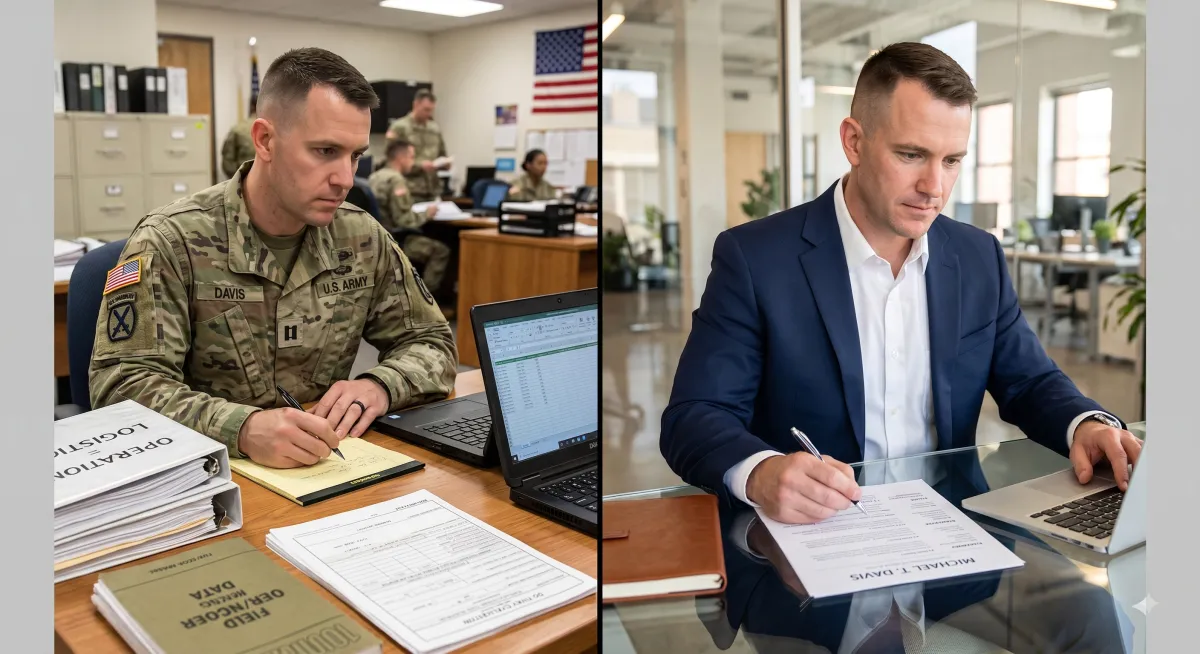
Transitioning from a military career to the civilian workforce is one of the most significant professional pivots a person can make. While your service has provided you with unparalleled leadership, discipline, and technical expertise, the civilian job market often speaks a different language. Mastering this transition requires a strategic shift in how you present your experience to recruiters and hiring managers.
At Human Capital Solutions, Inc., founded by Pete Mitchell, a selected Society for Human Resource Management (SHRM) Military Community Ambassador, we specialize in helping high-performing professionals translate their unique backgrounds into compelling civilian career narratives. This guide explores how to bridge the gap between military service and your next high-impact role, ensuring your resume and interview presence resonate with modern hiring algorithms and human decision-makers alike.
TL;DR
Translate military jargon into civilian business outcomes to pass ATS filters.
Prioritize networking over job boards; 70-85% of jobs are filled through connections.
Focus on "positioning" rather than "competing" by highlighting specific, transferable skills.
Seek professional coaching to bridge the cultural gap in corporate communication styles.
What is military to civilian transition career advice?
Military to civilian transition career advice is the specialized guidance provided to veterans to help them translate their military experience, leadership, and technical skills into terms recognized and valued by civilian employers. This process involves rebranding professional histories, mastering corporate interview techniques, and navigating the nuances of civilian organizational culture.
For many, this transition is not just about finding a new job; it is about finding a new mission. According to a 2023 Pew Research analysis, millions of veterans navigate this shift annually. Without expert guidance, many highly skilled individuals struggle to move past automated screening systems that prioritize specific keywords over general leadership ability.
Table of Contents
Why is military to civilian transition career advice important?
How does military to civilian transition career advice work?
What are the benefits of military to civilian transition career advice?
How do you implement a successful career transition?
What are common transition mistakes?
Key statistics about military to civilian transitions
Case study: Achieving a successful career pivot
Frequently Asked Questions
Why is military to civilian transition career advice important?
The civilian hiring landscape is heavily influenced by Applicant Tracking Systems (ATS). As noted by SHRM, over 75% of recruiters use ATS software to filter candidates. If your resume contains terminology that an algorithm doesn't recognize as a "business equivalent," your profile may be rejected before a human ever reviews it.
Beyond technology, the cultural shift is significant. Military environments emphasize mission success and hierarchy, whereas many civilian tech and corporate environments prioritize cross-functional collaboration and agile iteration. Expert advice helps you adjust your communication style to match these expectations.
What is an ATS (Applicant Tracking System)?
An ATS is a software application that automates the recruitment process by sorting, filtering, and ranking job applications based on keywords, skills, and experience criteria.
How does military to civilian transition career advice work?
Effective career coaching follows a structured methodology. First, we conduct a deep-dive audit of your service history to identify "transferable" skills. We then rewrite your professional identity to focus on achievements rather than duties. Finally, we implement a networking strategy that moves you from "cold applying" to "warm introductions."
We believe and emphasize that successful candidates do not compete, they position themselves. By shifting the narrative from "I served in the military" to "I managed multi-million dollar logistics projects under extreme pressure," you instantly become a more attractive candidate for senior-level civilian roles.
What are the benefits of military to civilian transition career advice?
Higher Salary Potential: Professionals with coached strategies often negotiate compensation 15-20% higher than those who don't.
Reduced Time-to-Hire: Strategic networking significantly cuts down the months spent in the job-search "limbo."
ATS Optimization: Ensure your resume ranks higher in automated searches by using industry-standard terminology.
Confidence in Interviews: Practice answering behavioral questions using the STAR (Situation, Task, Action, Result) method.
Strategic Career Alignment: Move away from "any job" and toward roles that align with your long-term career growth.
Expanded Professional Network: Gain access to hidden job markets that are never posted on public boards.
How do you implement a successful career transition?
Step 1: Audit your technical and soft skills
List every responsibility you held. Now, remove the military acronyms. Translate "Commanding Officer" to "Department Lead" and "Deployment Logistics" to "Supply Chain Management."
Step 2: Optimize your digital footprint
Your LinkedIn profile is your primary billboard. Ensure your headline targets the specific civilian industry you are entering. According to LinkedIn data, profiles with professional photos and optimized keywords receive 21x more views.
Step 3: Network, don't just apply
Stop relying on "Apply Now" buttons. Reach out to peers who have already made the transition. Ask for informational interviews to learn about their firm's culture. Find out who the hiring manager is and connect with them on LinkedIn.
Step 4: Master the civilian interview
Civilian interviews are often less structured than military boards. Practice articulating your achievements as data-driven outcomes. Use specific metrics to demonstrate your impact.
Step 5: Negotiate with precision
Know your market value. Research salary ranges using tools like Glassdoor or Salary.com to ensure you are not undervalued during the offer phase.
Example: The Power of Translation
Weak: "Responsible for leading a platoon of 30 soldiers and managing equipment maintenance schedules."
Strong: "Directed a 30-person team in high-stakes operational environments, increasing equipment readiness by 40% through the implementation of a new preventative maintenance tracking system."
What are common military to civilian transition mistakes?
Over-relying on Jargon: Using acronyms that civilian recruiters do not understand.
Applying for the Wrong Level: Underestimating your leadership value and applying for entry-level roles.
Ignoring Networking: Assuming that a strong military record alone will guarantee a job offer.
Passive Searching: Relying solely on job boards instead of actively building industry relationships.
Failing to Negotiate: Accepting the first offer without understanding current market compensation standards.
Case study: How a Mid-Level Technologist Achieved a 40% Salary Increase
Challenge
A veteran with 12 years of experience in military communications was struggling to get interviews for civilian IT management roles. Their resume was filled with military-specific technical acronyms that were being filtered out by corporate ATS software.
Solution
We worked with the client to translate their experience into industry-standard IT infrastructure terminology. We revamped their LinkedIn profile to highlight their experience managing large-scale, mission-critical networks and implemented a referral-based networking strategy.
Results
Secured 5 final-round interviews within 60 days.
Received two job offers from Fortune 500 companies.
Negotiated a starting package 40% higher than their initial target.
Frequently Asked Questions
Does military service count as professional experience?
Yes, absolutely. However, you must frame it in a way that shows how your leadership and technical skills directly solve the problems of the civilian employer.
How long does the transition usually take?
On average, a successful transition takes 3 to 6 months of focused effort. This includes resume optimization, networking, and interview preparation.
Should I hide my military background?
No. Your military background is a unique selling point. The goal is not to hide it, but to translate it into language that civilian hiring managers value.
Are there specific industries better for veterans?
Industries such as Logistics, Cybersecurity, Project Management, and Operations are excellent fits because they value the discipline and leadership skills honed during service.
What is the biggest hurdle in the transition?
The biggest hurdle is often the "language barrier"—the disconnect between military culture and corporate HR terminology.
How do I negotiate salary if I have no civilian experience?
Research the market rate for the role and highlight the transferable skills (leadership, project management, technical proficiency) that justify a higher salary.
Do I need a new resume for every job?
You should tailor your resume to the specific job description to ensure you hit the keywords the ATS is looking for.
Can a career coach help with networking?
Yes. A coach can help you refine your "elevator pitch" and connect you with alumni or industry professionals in your target field.
Key Takeaways
✓ Translate military duties into business outcomes.
✓ Optimize your resume for ATS algorithms.
✓ Focus on networking over cold applications.
✓ Position yourself as a leader, not just a service member.
✓ Research salary benchmarks to negotiate effectively.
✓ Partner with an expert to bridge the cultural gap.
Your transition is not the end of your professional growth; it is the beginning of a new chapter where your skills can be leveraged in entirely new ways. By shifting your perspective and strategy, you can secure a role that honors your service while providing the compensation and career trajectory you deserve.
If you are ready to take control of your career path, Human Capital Solutions, Inc is here to help. Our tailored approach ensures that your unique experience is highlighted, understood, and rewarded by the best employers in the market.
transitioning veteran career coach
Back to top